
It’s not every day you get to witness a power shift in a single sentence. But last week, I did. I’m a janitor at a major university, and I also work part-time helping people with special needs. That second job taught me a lot — especially how to handle disrespect.
The Beginning
I’ve been doing this work for years. When someone asks for something in a rough or demanding way, I’ve learned to respond with calm, polite clarity. The training is simple: “I’m sorry, is that how we ask for things?” It’s not meant to be aggressive — it’s a gentle reminder that everyone deserves respect. The moment I say it, the other person usually stops, looks uncomfortable, and then apologizes or says “sorry, I didn’t mean to be rude.”
It’s a small tool, but it works. And I’ve used it countless times in my other job. But I never thought I’d use it at work — not with someone in a position of authority.
What I Discovered
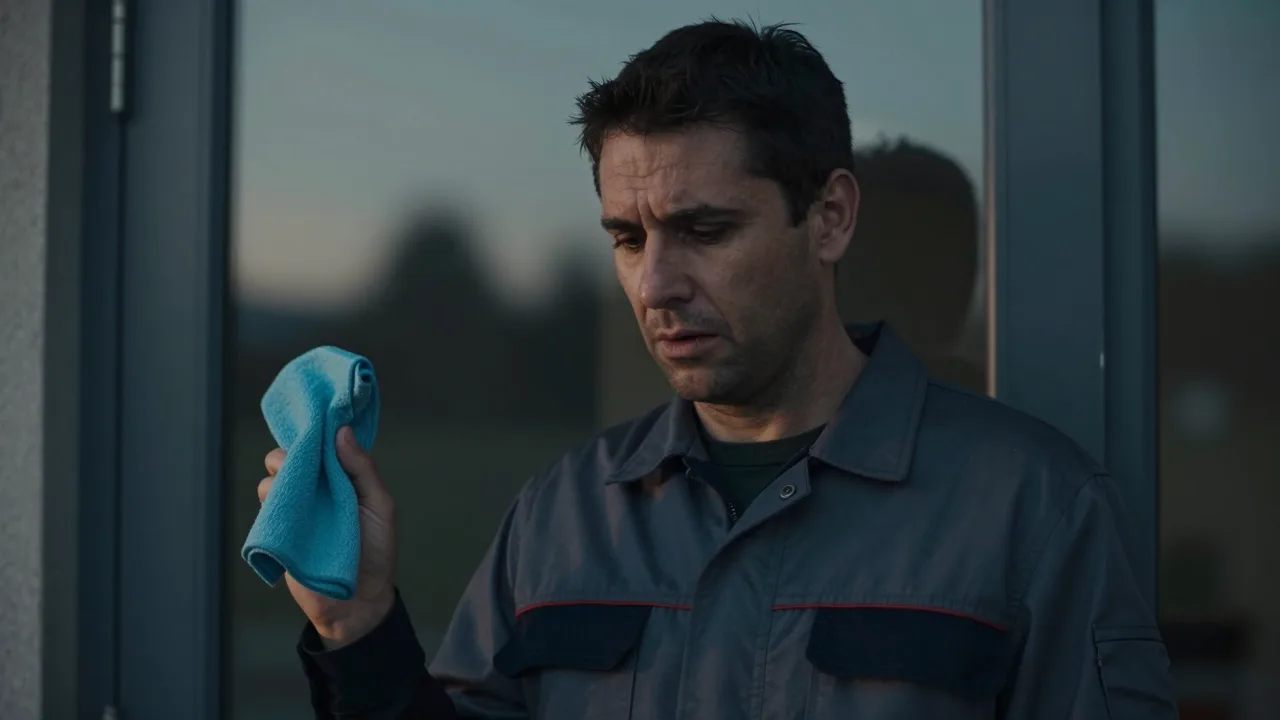
It started like any other day. I was cleaning the glass door of a classroom hallway, wiping down the surface, making sure it sparkled. My hands were covered in gloves, my cart full of supplies. I was focused, quiet — just doing my job. Then I heard a voice behind me.
“Janitor,” the voice said, sharp and direct. “You forgot the trash can in my room. I need you to take care of it.”
My brain didn’t even process the words — it just reacted. I turned around, and before I could stop myself, I said, “I’m sorry, is that how we ask for things?”
And then… silence.

My heart stopped. I could feel my face heating up. What did I just do? I realized what I’d said — and who I’d said it to. This wasn’t a client. This was a professor. A person who, in my world, had power. And I had just called her out for being rude — in front of a hallway.
The Immediate Aftermath
“Oh,” she said, her tone shifting from annoyed to stunned. “I didn’t mean to sound rude.”
“I’m sorry,” I said quickly. “That was my training. I’m used to people asking for things in a different way. It just… came out.”
My hands were shaking. I could feel my breath catching. I didn’t want to make this worse. But I had to explain — at least a little.
She looked at me for a beat. Then she said, “Thank you. I didn’t realize I was being that way. I’m sorry.”

And just like that, the tension broke. She walked away, and I stood there, still clutching my cleaning rag, thinking Did that just happen?
The Confrontation
That night, I couldn’t stop replaying it in my head. Was I wrong? Did I cross a line? I knew I wasn’t trying to be disrespectful — I was just being honest. But in a world where your job depends on not rocking the boat, I felt like I’d just thrown a grenade.
My coworker — the one who actually was supposed to take out the trash that day — found out what happened. She laughed. “Dude, you totally called her out. That’s awesome.”
“I don’t know,” I said. “I could’ve lost my job. I could’ve been fired. I didn’t even think about that.”
“She’s a professor,” she said. “But she’s also a human being. If she can’t handle a little truth, then maybe she shouldn’t be in a position of authority.”
That stuck with me. What if she had called HR? What if she’d filed a complaint? I’d have had to explain my training, my experience with people who need gentle redirection. And I’d have had to put myself on the defensive — for doing something I was trained to do.
Back to the Office
Today, I saw her again. In the same hallway. I was carrying a mop. She was walking toward me, holding a stack of papers. I paused. My heart started beating again. Do I apologize again? Or just keep walking?
Instead, I said, “I wanted to thank you.”
She stopped. “For what?”
“For not reporting me to HR,” I said. “I know I could’ve been fired. But you didn’t.”
She smiled. “Honestly? I was glad you said it. I was being a jerk. I didn’t realize it until you told me. I’ve been so caught up in my own stress that I forgot how to treat people with respect.”
And that’s when I realized: she didn’t report me not because she was weak — but because she was strong enough to admit her mistake.
Looking Back
Now I think about it — and I have to say, I’m glad I said it. Not just because I stood my ground, but because it started a conversation. One that didn’t have to be loud or angry. One that was simply honest.
It’s funny how one question — one simple phrase — can shift the entire energy of a space.
I’m sorry, is that how we ask for things?That’s the line I was trained to say. But I didn’t expect it to land so hard. I didn’t expect it to change anything.
But it did.
Maybe the real lesson isn’t about being right or wrong. It’s about having the courage to say the quiet truth, even when it’s uncomfortable. Even when it risks your job. Even when you’re not sure what will happen.
Because sometimes, the most powerful thing you can do is just ask a question. And sometimes, the answer is more powerful than you ever imagined.





0 Comments
Leave a Comment
Comments must be in English and will be reviewed before appearing.
No comments yet. Be the first to share your thoughts!