

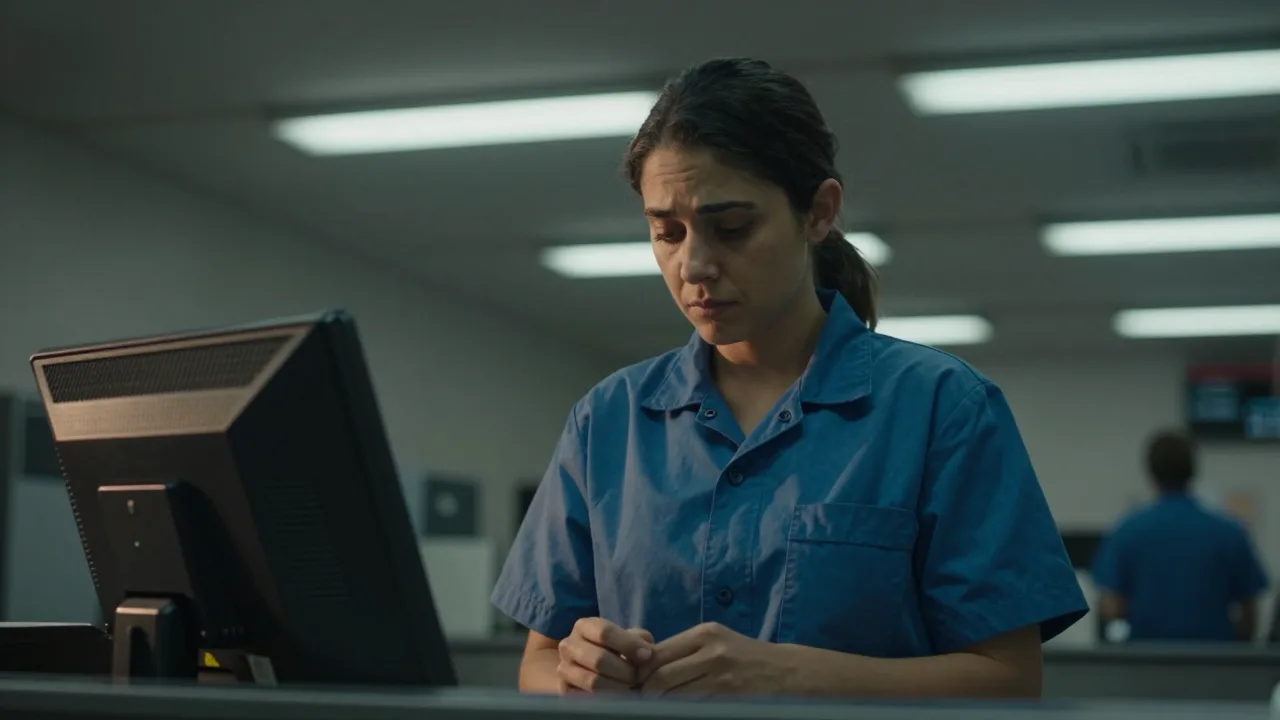
Every morning, I wake up before the sun, walk three blocks through the dusty streets of my town, and clock in at the supermarket. My shift starts at 6 a.m., and I don’t get to leave until 6 p.m. I earn $2 an hour before taxes — that’s roughly $100 a month. I know what you’re thinking: “That’s a lot less than minimum wage in the U.S.” But here, it’s not just about the number. It’s about what that money can’t buy.
The Beginning
My town is tiny — only three kilometers long — and it’s always hot. The sidewalks are cracked, the buildings are old, and the streets aren’t paved. I’ve lived here all my life. I started working at the supermarket when I was 16, just to help my mom pay for my younger brother’s school supplies. At first, I didn’t mind. I thought I was doing okay. But as the years passed, the reality got heavier.
My coworkers say I’m lucky to have a job at all. But being lucky doesn’t pay the bills. When I go to the pharmacy to buy medicine for my father, I have to choose between cough syrup or painkillers. I’ve learned to ration food. I eat rice and beans most days, and sometimes I skip breakfast to save money for the bus. I’m not alone in this — but no one talks about it. No one really wants to know.
What I Discovered
Most of the customers in my store are Americans. They come to visit relatives, or just to shop at the cheaper prices. They walk through the aisles with full baskets and bright smiles. I’m the only cashier who speaks English, so I end up talking to them a lot. They’re always surprised. “Wow, everything is so cheap here,” one woman said to me last week, holding up a bag of chips. “I could have bought this for half the price back home.”
But I didn’t smile. I just looked at her and said, “You don’t understand. The prices are low — but so are the wages.”
She blinked. “I don’t know what you mean.”
That’s when it hits me. They see a country where things cost less, but they don’t see the people who make it possible. The people who work 12 hours a day, who sleep in rooms without electricity, who go to bed hungry. I don’t live in a place where I can afford to be poor — not even for a day.
When I try to explain this to people, they say, “Oh, but there are poor people in the U.S. too.”
You don’t understand. The prices are low — but so are the wages.
And I want to scream. I want to say: “Yes, there are poor people in the U.S., but they still have $7.25 an hour — sometimes more. They can go to a food bank. They don’t have to sleep outside, or wear the same clothes for weeks. They don’t have to wonder if the police will even show up when someone steals their phone.”
The Real Cost of Being Poor
Here, being poor doesn’t just mean no money. It means no safety. No protection. No chance. If you’re poor, people take advantage of you. If you’re poor, you get treated like a ghost. I’ve seen it happen. I’ve seen a man get beat up in front of the store, and the police didn’t come. They said, “It’s not worth the paper.”
One night, I was walking home after my shift. A group of young men started following me. I started to run. I didn’t stop until I reached my door. I stayed inside all night. I didn’t tell anyone. Why? Because I didn’t think anyone would believe me.
The Confrontation
I started to talk about this more — not just with customers, but with people online. I shared my story, and people responded. Some said, “You’re brave.” Others said, “It’s not that bad.” But one comment cut deeper than any insult.

Im mexican and poor here in the u.s. its looking more and more similar to mexico but at least here they have food banks and ebt for people
That hit me hard. I’ve never lived in the U.S. but I know what that means. You can’t even imagine living in a place where your government gives you basic support — food, housing, medical care — just because you’re struggling. Here, I have none of it. No safety net. No help. Just me and the weight of it all.
Another person said, “I make $20 an hour. I’m Mexican. I live in the U.S. and I’m struggling.”
And I thought: So you have a car. You have insurance. You can afford a baby. I don’t even have enough for a hospital visit. I don’t have a degree. I don’t have a future. I just have a job that pays $2 an hour and makes me feel like I’m nothing.
But the truth is, I know people who’ve made it out. My mother, for example — she used to live in a neighborhood where there was no food, no clean water. She used to eat trash. She used to sleep in the streets. She worked so hard, she managed to send me to school. But that’s not the story everyone tells. That’s not the story I’m allowed to tell.
Looking Back
Now, I look at the Americans who come through my store and I wonder: How much do they really know? How many of them think poverty is just a number? How many of them think being poor is just a choice?
Every time someone says, “At least you’re not in the U.S.,” I want to say: “Then you don’t understand what it means to be poor here.”
Being poor sucks everywhere BUT sucks way more here.
That’s not me bragging. That’s me being honest. I don’t want pity. I just want people to see — and care.
- Every day, I see the same customers,
- Every day, I hear the same jokes,
- Every day, I wonder if anyone sees me — not just as a cashier, but as a person.
I don’t want to be invisible. I want to be heard. I want to be seen.
And I hope, one day, someone will listen.




0 Comments
Leave a Comment
Comments must be in English and will be reviewed before appearing.
No comments yet. Be the first to share your thoughts!